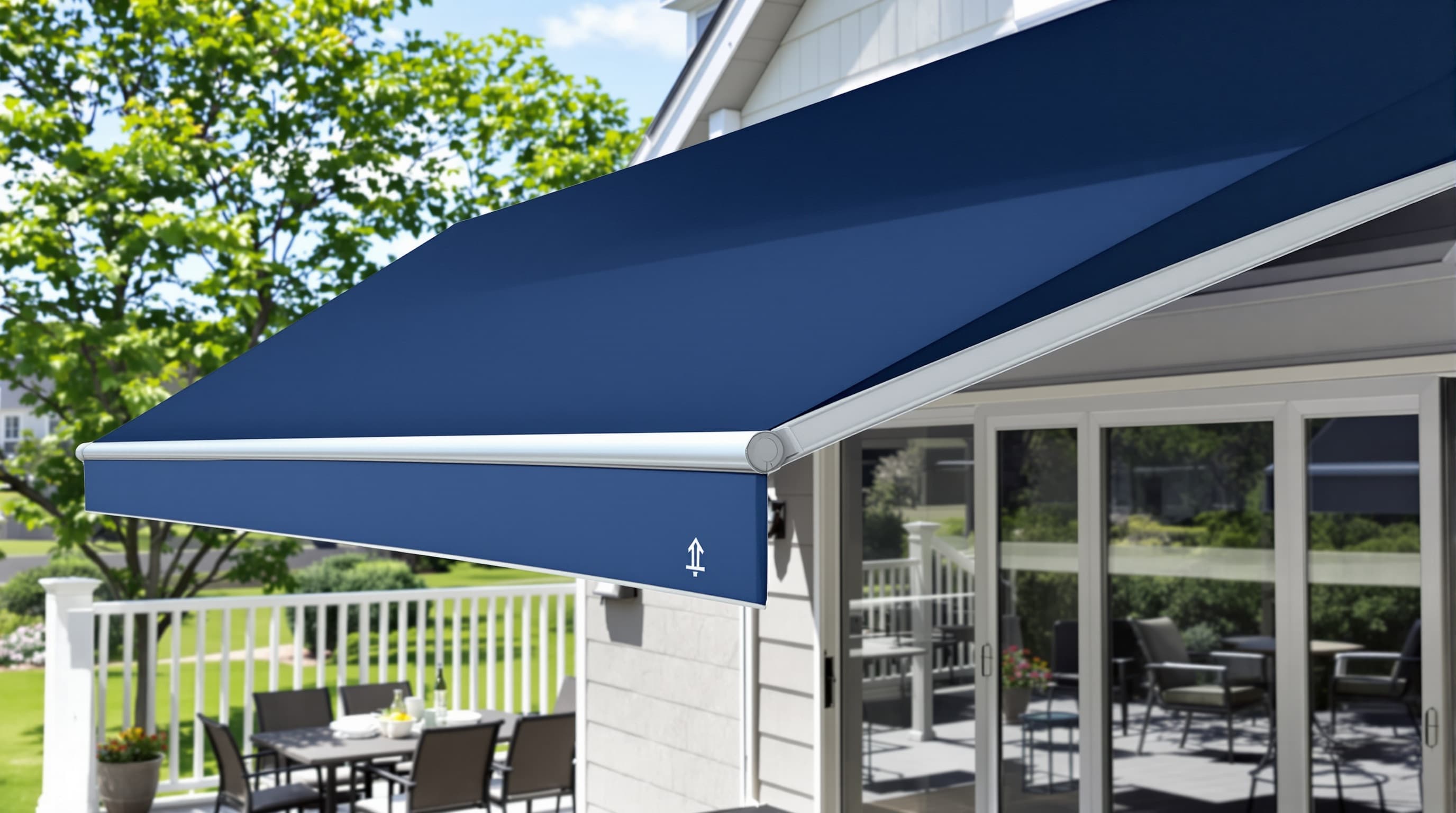
Retractable vs. Fixed Awning: Which Is Right for Your Long Island Home?
Both retractable and fixed awnings provide shade, add character to a home's exterior, and increase outdoor comfort. But they are meaningfully different products designed for different priorities — and on Long Island, where nor'easters are a fact of outdoor living, the choice between them has more consequence than it would in a milder climate.
Here is a clear, honest comparison from the perspective of someone who has installed both types throughout Nassau and Suffolk Counties for nearly two decades.
---
Quick Comparison Table
| Factor | Retractable Awning | Fixed Awning |
|---|---|---|
| Shade control | Fully adjustable | Always shading — no adjustment |
| Rain protection | Minimal — not waterproof | Similar — fabric not waterproof |
| Nor'easter protection | Retract it — problem solved | Risk of damage if not removed |
| Winter management | Retract through winter | Remove fabric for winter storage |
| Fabric lifespan | 8–18 years (retracted when not in use) | 8–15 years (always exposed) |
| Maintenance | Moderate (spring/fall inspection) | Moderate (seasonal canvas care) |
| Installation complexity | Higher — motor/crank mechanism | Lower — frame and fabric |
| Cost range | $1,800–$5,500 (residential) | $600–$2,500 (residential) |
| Wind vulnerability | High when extended; none when retracted | Moderate — fixed in place |
| Flexibility | Extend/retract as needed | Always in the same position |
| Best for | Primary patio shade, daily use | Windows, doors, low-maintenance shade |
---
The Case for Retractable Awnings on Long Island
Nor'easters: The Game-Changer
This is the single most important factor distinguishing the awning choice on Long Island from the same choice in virtually any other market. Nor'easters — the rotating coastal storms that hit Long Island from the northeast — arrive with 40–60-mph sustained wind gusts and can persist for 12–36 hours. They strike primarily from October through April, with occasional nor'easter-like conditions possible year-round.
A fixed awning cannot "hide" from a nor'easter. If it is up, it is exposed. Canvas fixed awnings that are not seasonally removed face near-certain damage in any significant storm.
A retractable awning, when retracted, presents essentially zero wind profile. The fabric is wrapped around the roller tube, the arms are folded against the building, and the entire mechanism is compact and protected. A properly retracted retractable awning has survived every nor'easter and hurricane I have seen pass over Long Island since 2006 — including Sandy — without damage.
The practical requirement: You must retract the awning before the storm. For motorized awnings with wind sensors, this happens automatically. For manual awnings, you need to actually do it — which requires being home or having someone who can retract it for you.
Flexibility in Use
Fixed awnings shade their footprint constantly. This has downsides:
- In spring and fall, when morning sun is welcome and warming, a fixed awning blocks that light permanently
- In the morning, when east light is low-angle and pleasant, a south-facing fixed awning may over-shade the patio
- On an overcast day, a fixed canvas awning makes the patio feel dark and cavelike
A retractable awning extends when you want shade and retracts when you do not. You can lie in the sun on a cool May morning and have full shade for the 3 PM barbecue without changing anything structural.
Fabric Longevity
A retractable awning fabric spends a meaningful portion of its life rolled up and protected from UV exposure and weather. This directly extends fabric life. A Sunbrella fabric on a well-cared-for retractable awning (retracted in bad weather, retracted when not in use, brought in for winter) will last 12–18 years in most Long Island environments. The same Sunbrella fabric on a fixed awning, exposed 24/7 year-round, runs 8–12 years.
---
The Case for Fixed Awnings on Long Island
Window Awnings: Fixed Almost Always Makes Sense
For window awnings — the small awnings over bedroom and living room windows that block summer solar heat gain — fixed is almost always the right choice. There is no need to extend and retract a window awning based on weather; it should be doing its job constantly. And window awnings are small enough (typically 36–60 inches wide) that their wind load in even a significant storm is manageable.
Fixed canvas window awnings are a practical choice for Long Island home windows: low maintenance, and their small profile means they simply do not fail in storms the way larger fabric patio awnings can.
Door Awnings: Fixed Is the Standard
Front entry awnings, rear door awnings, and side entrance awnings are almost always fixed. Their primary function is constant — keep rain off the entry, protect the door from weather exposure, shade the entry in hot weather — and none of these functions benefit from retractability.
Cost: Fixed Is Less Expensive at Equivalent Size
A fixed canvas patio awning can cost $1,000–$2,500 installed for a 12–16-foot width. The equivalent retractable awning costs $2,500–$4,500. The retractable costs more because of the arm mechanism, the roller tube assembly, and (for motorized) the motor and electrical work.
If budget is a hard constraint, a fixed canvas patio awning is a legitimate choice — provided you are committed to removing it seasonally (late October through April) or accepting that it may be damaged by a nor'easter.
Commercial Applications
For commercial storefronts, fixed awnings are standard. The constant brand visibility is the point — you do not want your business name retracting out of view. Commercial canvas awnings are specified and installed to handle higher wind loads than residential ones, and most commercial applications do not have the DIY-retracting option anyway (the business has staff but not necessarily someone available to retract an awning before every storm).
---
Long Island Nor'easter Risk Assessment by Awning Type
| Awning Type | Nor'easter Risk | Risk Management |
|---|---|---|
| Retractable + wind sensor | None — auto-retracts | Automatic |
| Retractable, manual | Low — if retracted in time | Owner attention required |
| Fixed canvas patio | High | Must be seasonally removed |
| Fixed canvas window | Moderate | Smaller profile; can leave up in most storms |
| Commercial fixed canvas | Moderate | Professionally installed for higher loads |
---
Our Recommendation for Long Island Homeowners
Here is where I land after nearly 20 years of installing both types on Long Island:
For main patio awnings (14+ feet wide, primary outdoor living area): Retractable, motorized, with a wind sensor. The nor'easter risk to a large fixed canvas awning is simply too high on Long Island. The wind sensor eliminates the only meaningful failure mode of a motorized retractable (forgetting to retract before a storm).
For secondary patio awnings (smaller, secondary spaces): Manual retractable is a reasonable and cost-effective choice.
For window awnings: Fixed canvas. Zero reason to complicate this with retractability.
For door awnings: Fixed canvas, appropriately sized.
For commercial storefronts: Fixed, specified and installed to commercial wind load ratings.
---
What Does a Retractable Awning Add Over Fixed? A Cost Perspective
The incremental cost of a retractable awning over a fixed canvas patio awning is approximately $1,000–$2,000 for a 14-foot-wide application. Over a 10-year ownership period, this translates to $100–$200 per year.
What you get for that premium:
- Storm safety (retractable eliminates storm damage risk)
- Flexibility (use the sun when you want it)
- Extended fabric life (12–18 years vs. 8–12 years)
- Higher home value appeal (retractable awnings are a more desirable feature in the Long Island real estate market)
In my honest assessment, the premium is worth it for any primary patio awning application on Long Island.
---
Get a free estimate from Long Island Shade Co. Call (631) 565-8314 or request an online estimate. We serve all of Nassau and Suffolk Counties and will recommend the right awning type for your specific situation — no pressure, no upsell, just an honest assessment.
Retractable Awnings | Canvas Awnings | Nor'easter Storm Prep
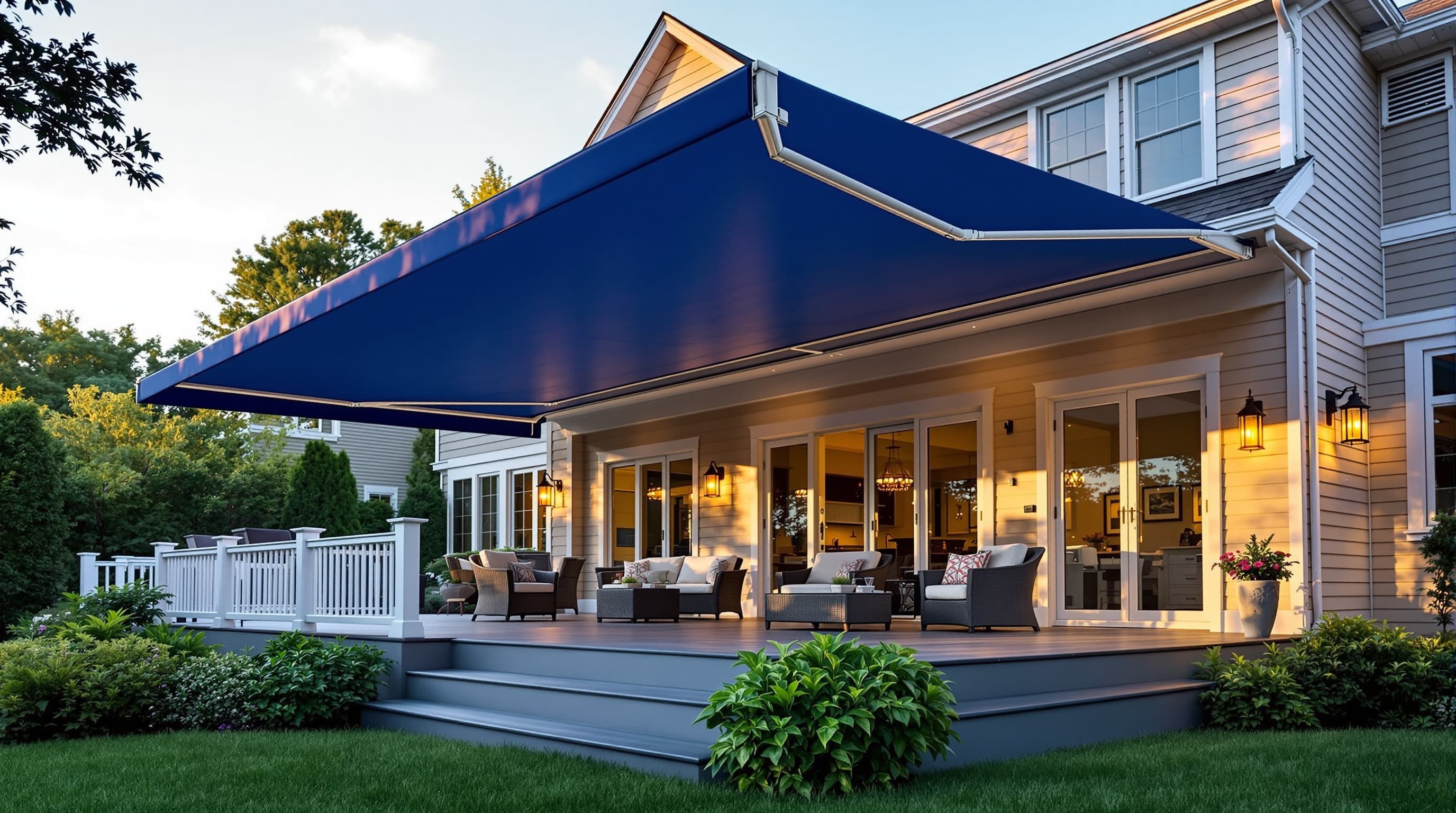
Long Island Shade Co.
Awning & Pergola Specialists
Our crew has installed both retractable and fixed awning systems across Long Island since 2006 — the same crew that shows up for your estimate finishes your job.